motion.illusions.im
The waterfall that makes the rocks rise.
In 1834 Robert Addams looked at the falling water at the Falls of Foyers, then at the rocks beside it. The rocks seemed to move upwards. That motion aftereffect is the signature of this site, with a desk you can try, and a careful look at induced movement, autokinetic drift, and a few other kinds of apparent motion — every claim sourced.
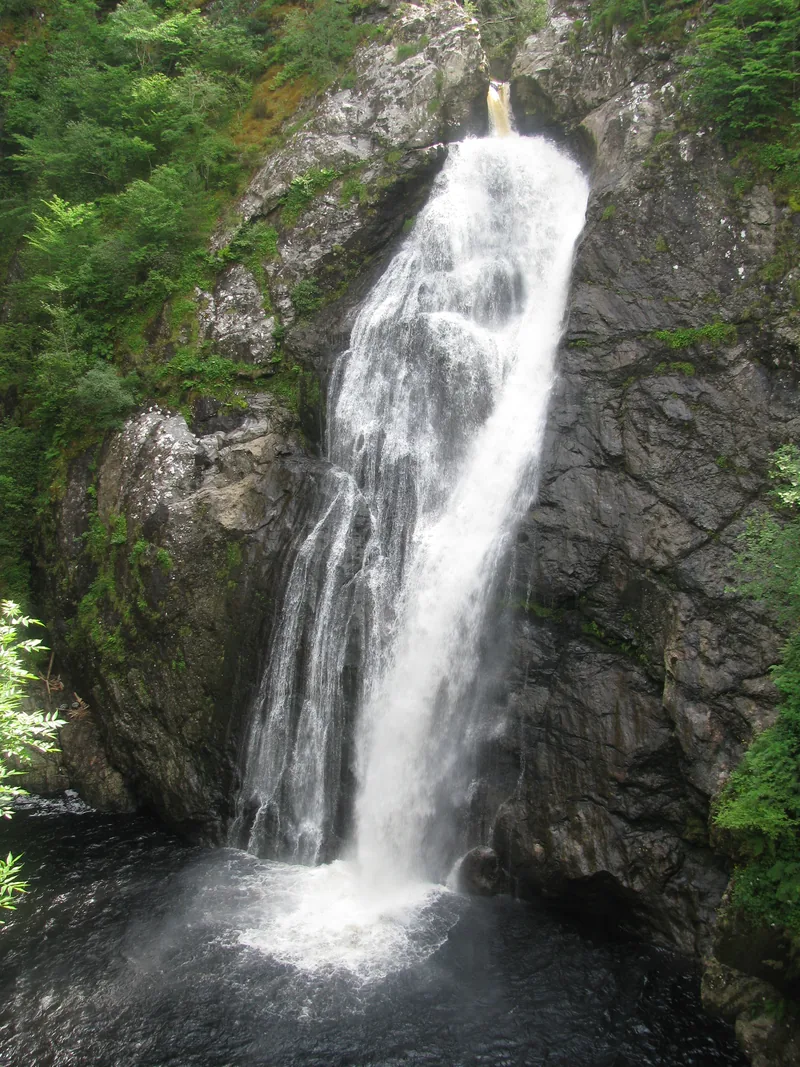
The waterfall that makes the rocks rise
Pick a story. In 1834 Robert Addams looked at the falling water at the Falls of Foyers, then at the rocks beside it — and the rocks seemed to move upwards. Encyclopaedia Britannica still uses everyday scenes, a parade, a train window, a star in the dark, to explain the same family of apparent motions.
Encyclopaedia Britannica describes the same aftereffect with a familiar scene: after you have watched a parade go by, the pavement may seem to move in the opposite direction to the marchers. The usual official account is fatigue in detectors that respond to one direction of motion, so the opposite direction is briefly over-represented. Official wording keeps that account as something that “probably” arises. This desk keeps the “probably” too. [source]
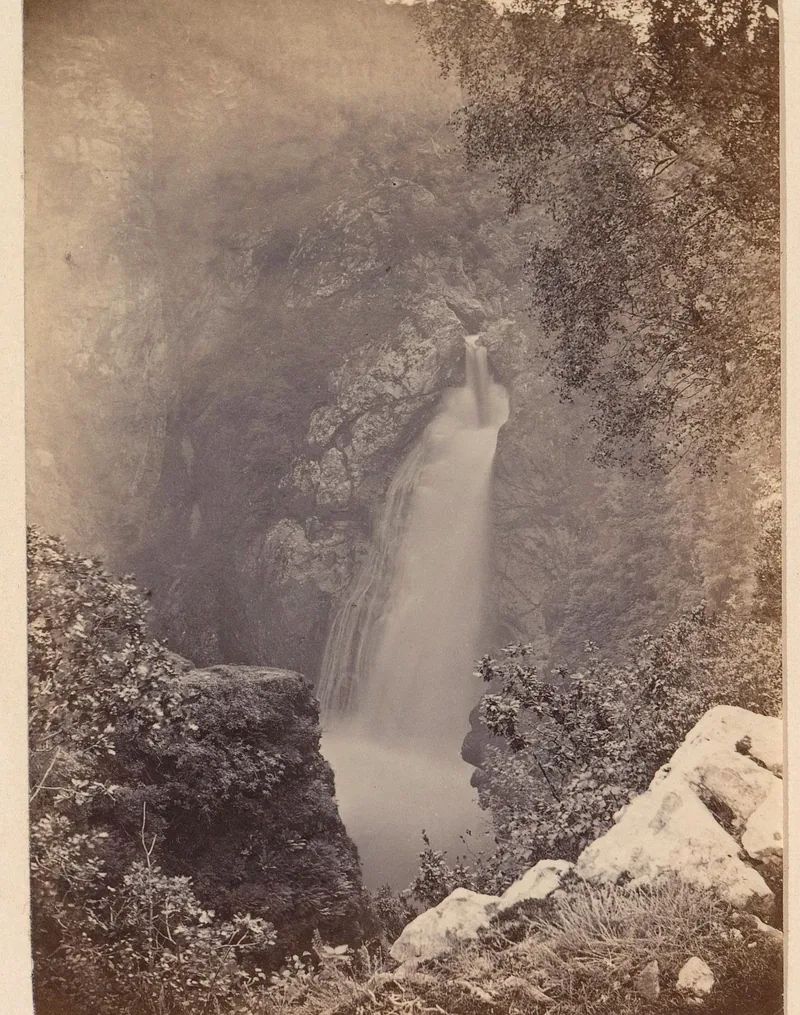
Addams’s account, published in 1834, is the classic version of the same aftereffect. The wording is public domain, and is quoted in full on the Foyers page. [source]
Around that aftereffect sits a small family. Induced movement is the appearance of movement in a still object when its frame moves — a train seen through a window is the official everyday case. The autokinetic effect is a small, steady light in darkness that seems to wander; Alexander von Humboldt described it in 1799, watching a star through a telescope. Very slow movement, official wording says, is about that of the minute hand on a watch. Under flickering light, a fan or a wheel can seem to turn slowly or even backward, and stagecoach wheels may do the same in the cinema. Film toys and the wagon-wheel effect on a screen are reserved here for a planned sister site, so they are not mixed up with the rocks that only seemed to rise.
Enjoyed this desk of motion that is not quite there?
No pop-ups. No intrusive advertising. Just interesting stuff. A little support helps the next illusions.im site get built.