Home · Falls of Foyers
A letter from 1834
Addams at the Falls of Foyers
The Falls of Foyers drop into a wooded gorge on the River Foyers, near Loch Ness. In 1834 Robert Addams published a short account of a peculiar optical phenomenon he had seen there.
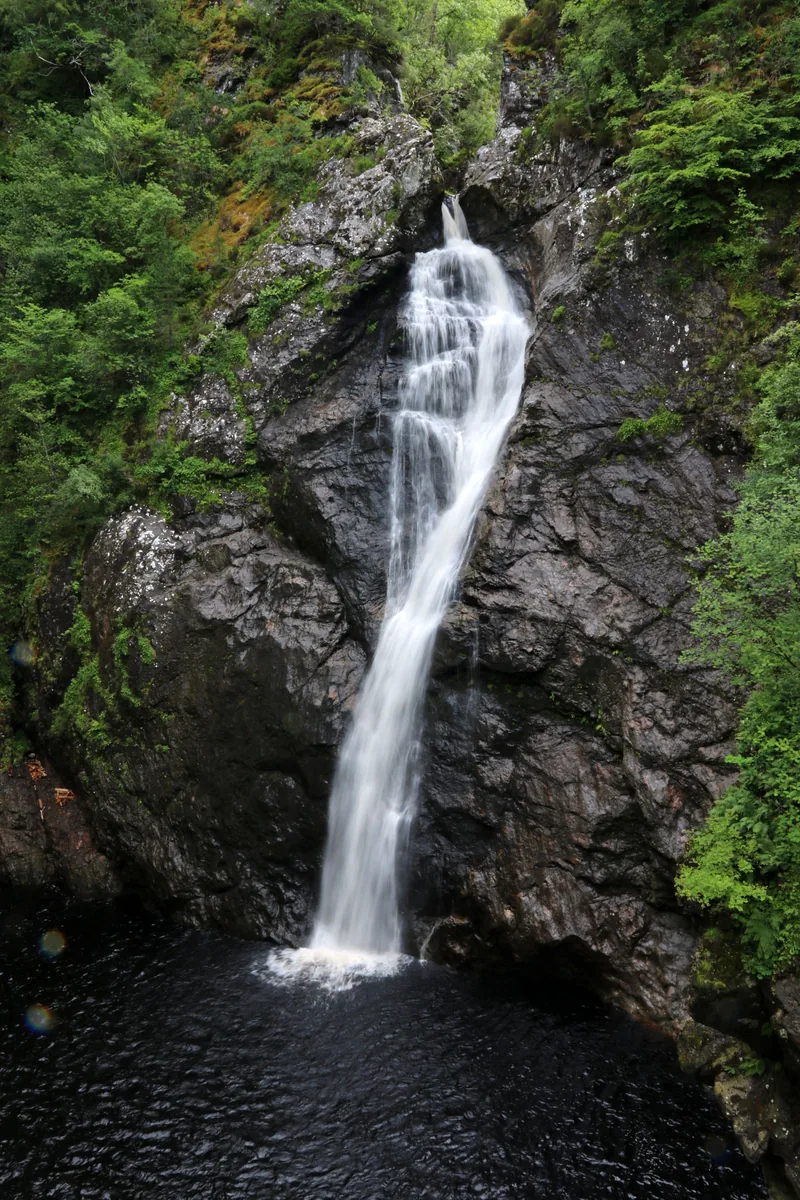
Having steadfastly looked for a few seconds at a particular part of the cascade, admiring the confluence and decussation of the currents forming the liquid drapery of waters, and then suddenly directed my eyes to the left, to observe the vertical face of the sombre age-worn rocks immediately contiguous to the water-fall, I saw the rocky face as if in motion upwards, and with an apparent velocity equal to that of the descending water, which the moment before had prepared my eyes to behold this singular deception.
The wording is public domain. Addams looked at one part of the cascade for a few seconds, admiring what he called the confluence and decussation of the currents, the “liquid drapery of waters.” Then he looked left, to the vertical face of the sombre age-worn rocks immediately beside the fall. Those rocks seemed to move upwards, with an apparent speed equal to that of the descending water, which, he wrote, had prepared his eyes to behold “this singular deception.”
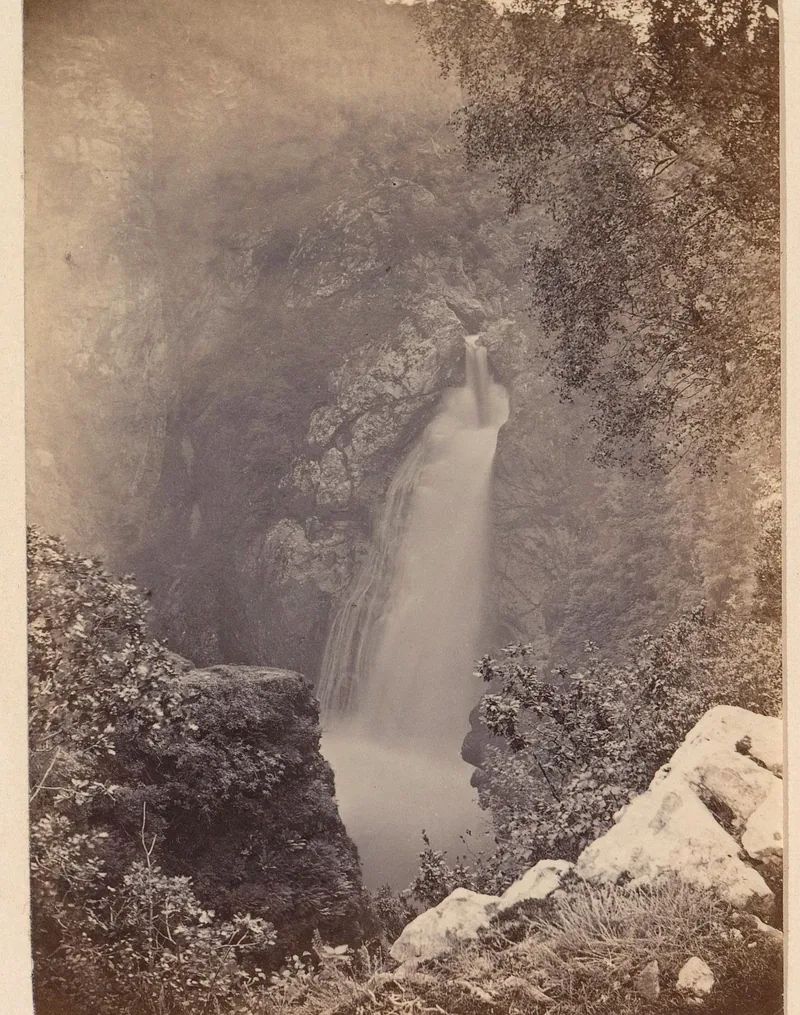
A mid-nineteenth-century albumen print by George Washington Wilson shows the same fall a generation later, cropped here to the photograph as it was mounted in a Rijksmuseum album. The surrounding album page is not used as a picture. Modern photographs on this site — from 2009, 2015 and 2017 — show the place as it has been photographed since, from the pool, from a high viewpoint, and from the wet stone of the amphitheatre. None of them is a reconstruction of Addams’s visit. None of them is asked to stand in for a height, a platform, or a path that his paper does not name.
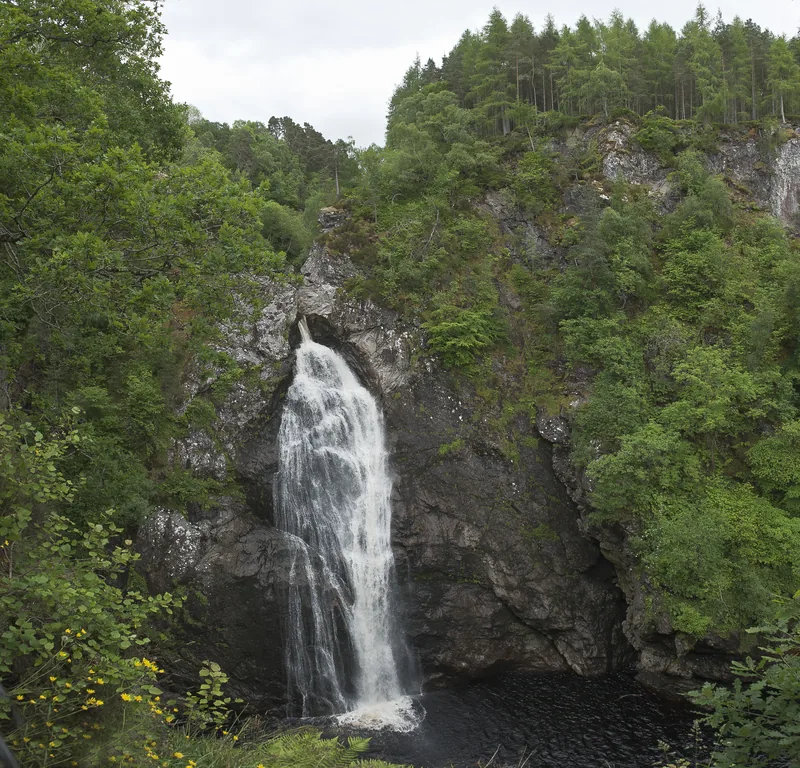
This site does not invent the height of the fall, or claim that Addams stood on any particular viewing platform. A Commons file caption mentions “a fall of 165 feet”; that figure stays with the file, and is not repeated here as a fact, because it is not taken from the 1834 wording. The place is the one he named. The effect is the one he described. The rocks were not rising. The falling water had prepared his eyes to see them that way.
Enjoyed this desk of motion that is not quite there?
No pop-ups. No intrusive advertising. Just interesting stuff. A little support helps the next illusions.im site get built.