Home · Autokinetic
A light in the dark
A star that seemed to wander
An isolated point of light in a dark room can be reported as moving when it is not. Official wording calls this the autokinetic effect. Alexander von Humboldt described it in 1799, watching a star through a telescope, and attributed the movement to the star itself. [source]
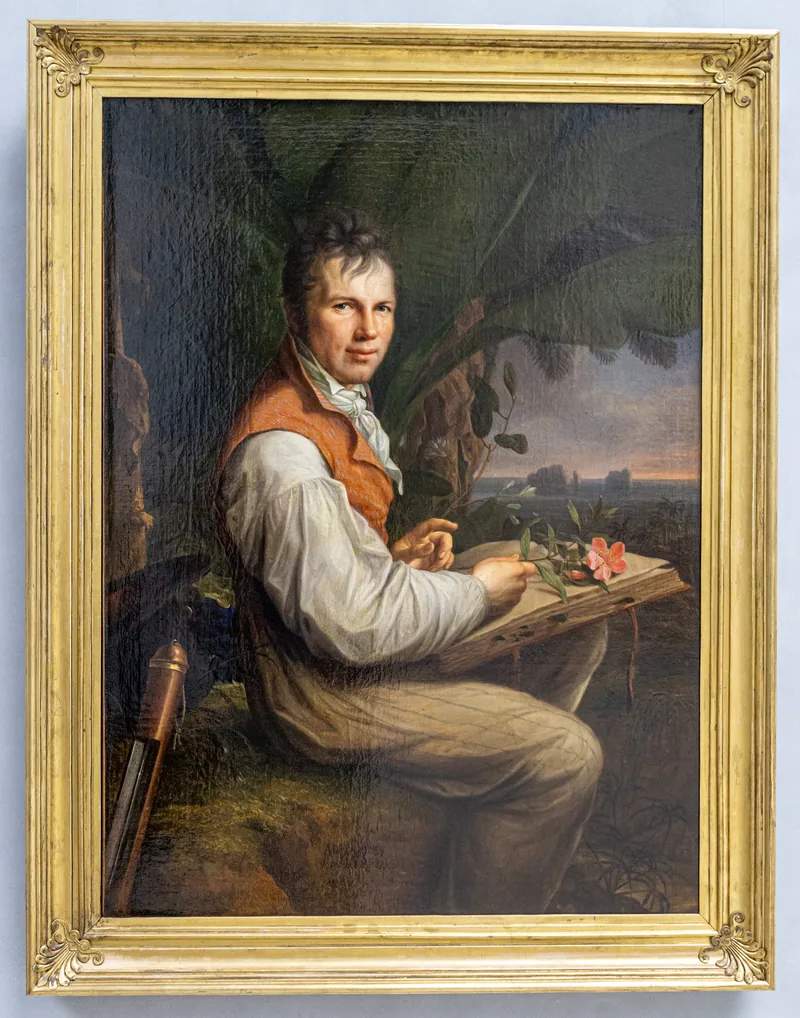
The portrait on this page is of Humboldt, painted in 1806 by Friedrich Georg Weitsch, and photographed on the canvas in the Alte Nationalgalerie, Berlin. It is a portrait. It is not a picture of the 1799 observation. Official wording does not, on the page used here, name the star, the place, or the telescope. This desk does not invent them.
About sixty years later, official wording says, the effect was shown to be subjective. It apparently arises from instability in the sense of eye position, when there is no visual frame of reference. “About sixty years later” is kept as written. A more precise year is not added, and the later finding is not read back into 1799 as if Humboldt had already said the motion was only in the sense of his own eyes.
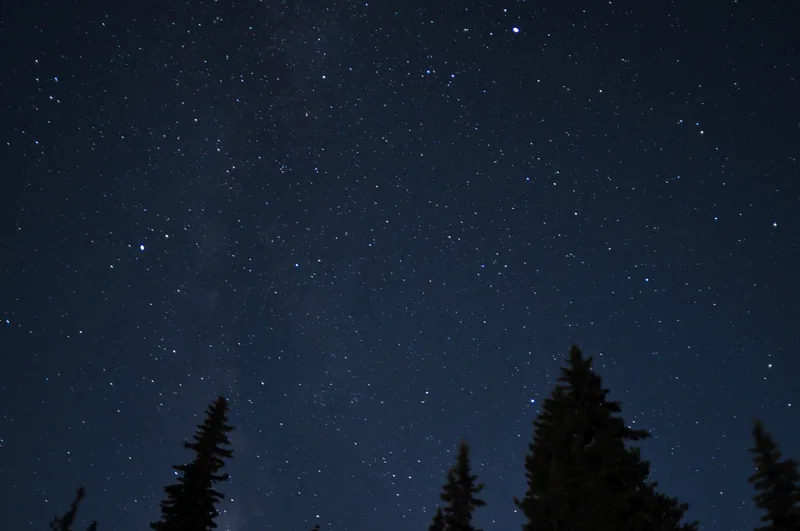
The night sky above the boreal forest at Chisasibi, Quebec, photographed on 17 September 2019, is a photograph of stars. It illustrates the kind of darkness in which a single light can seem to wander. It is not a picture of the autokinetic effect, and it is not a claim that Humboldt was looking at these stars. The official story is smaller, and stranger, than a travel tale: a light that does not move, a dark field with no frame, and eyes that are not quite sure where they are pointing.
Enjoyed this desk of motion that is not quite there?
No pop-ups. No intrusive advertising. Just interesting stuff. A little support helps the next illusions.im site get built.